


An ingrown toenail in children is by no means a problem that affects only adults. It can occur at any age: in toddlers, school-age children, or adolescents. The big toe is most commonly affected. However, inflammation can also develop on other toes and, in some cases, around the fingernails.
At first, the child may only report an uncomfortable sensation when pressure is applied or when walking. Later, the skin next to the nail may become red, swollen, and painful. If the edge of the nail plate continues to injure the soft tissue, a small wound, a weeping area, discharge, or tender granulation tissue may develop. Colloquially, this tissue is sometimes referred to as „wild flesh.“.
Parents should not wait until putting on shoes, walking, or participating in sports becomes painful. At an early stage, the problem can usually be treated much more gently, and worsening inflammation can often be prevented. At our Podiatry Practice in Vienna We see exactly these kinds of cases all the time—and the good news is: an ingrown toenail in a child can almost always be treated gently.
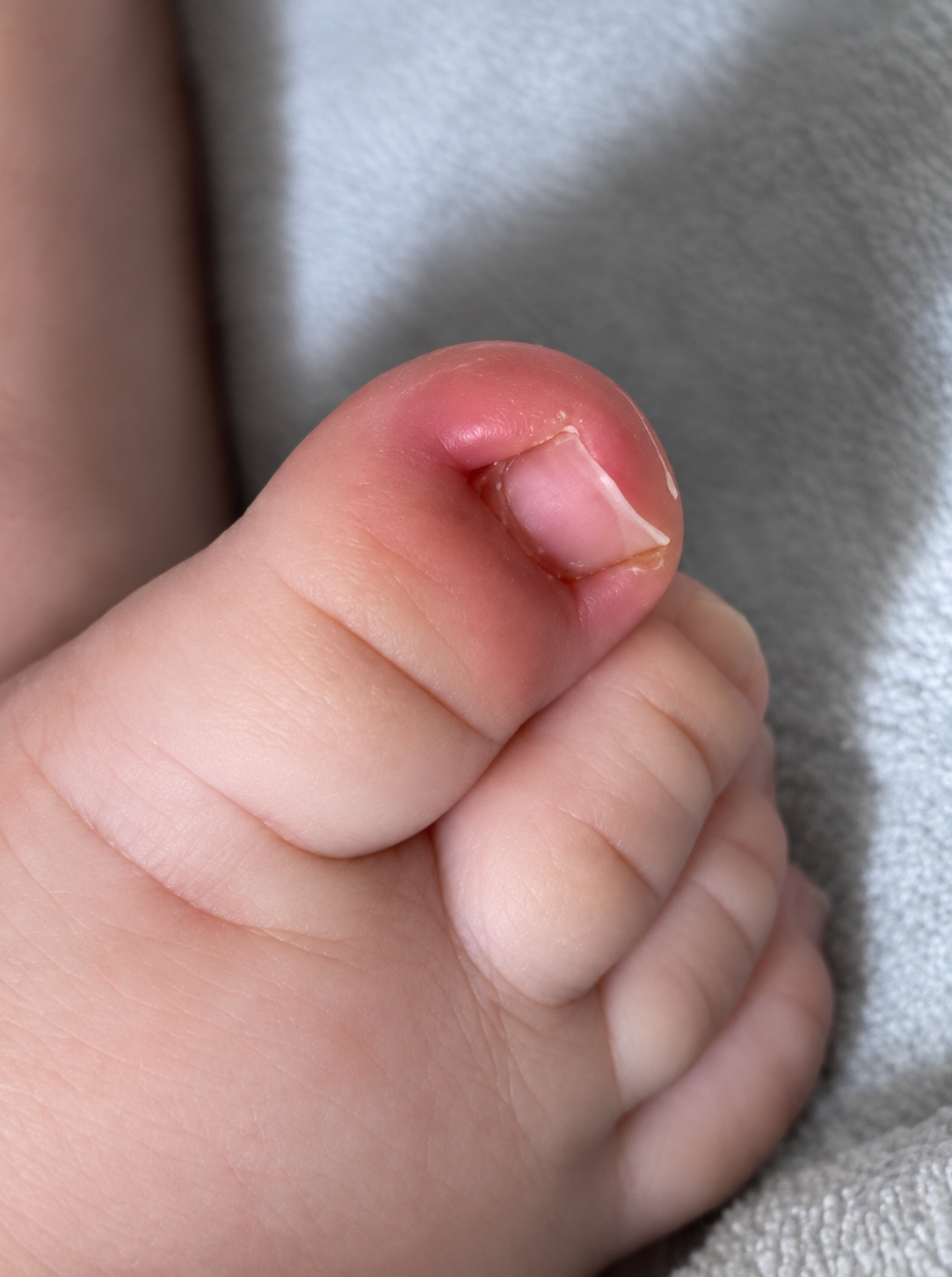
Why do children's toenails sometimes grow in?
In most cases, it is not just a single factor that is responsible, but a combination of several causes. Sometimes there is an anatomical predisposition to ingrown toenails. Tight shoes, moisture, or improper nail trimming can further aggravate the situation.
1. Rapid growth of the feet
During childhood and adolescence, feet can grow very quickly. The shoes often still look new and undamaged. That’s why parents don’t always notice right away that they’ve already become too small in length, width, or height in the toe area. Constant pressure on the nail plate and the lateral nail folds can affect the direction of nail growth and contribute to ingrown toenails.
Therefore, it’s not just the listed shoe size that matters, but also whether there’s enough room for the toes. Children often can’t describe exactly why a shoe is too tight. Teenagers sometimes keep wearing their favorite pair even after it has become too tight.
2. Narrow shoes and tight socks
Shoes with narrow toes, tight sneakers, soccer cleats, ballet shoes, and other athletic shoes can squeeze the toes from the sides and from above. Socks that are too small or very tight also create constant pressure. The combination of tight footwear, intense physical activity, and damp skin is particularly problematic.
3. Cutting Nails Incorrectly
Nails that are cut too short and corners that are cut too deep are among the most common causes. After such a cut, a small, sharp piece of nail may remain on the side. As the nail continues to grow, it presses more and more into the skin and damages the tissue.
Toenails should be cut as straight as possible. The corners should not be rounded off too deeply, and the nail plate should not be cut extremely short. If a child is already trimming their own nails, their technique should be checked occasionally. Children and adolescents sometimes tear off their nails, cut a bothersome corner too deeply, or try to expose the painful area themselves. This can make the inflammation worse.
4. Anatomical Characteristics
In some children, the nail plate is naturally wider, more curved, or prone to curling inward. The shape of the lateral nail ridges, the position of the toes, and the distribution of pressure on the foot can also play a role. A mild congenital or acquired deformity may go unnoticed for a long time and only become apparent during a growth spurt, after changing shoes, during sports, or following an injury.
This does not mean that the parents cared for their child incorrectly. Sometimes it is simply a matter of anatomical predisposition. The professional's role is to identify this in a timely manner and select appropriate preventive or corrective measures.
5. Injuries and Intense Exercise
A blow to the toe, a falling object, an injury to the nail, or repeated stopping and pushing off while running, playing soccer, dancing, or participating in other sports can affect the growth of the nail plate. Sometimes the child cannot recall any specific injury. Repeated pressure from the toes against the front of a sports shoe may be enough on its own.
6. Moisture and Increased Sweating
Moist skin becomes softer and is more easily injured by the edge of the shoe. If a child wears closed-toe shoes or synthetic socks for many hours, or does not change their socks after practice, the risk of skin irritation increases.
This factor is particularly relevant during adolescence. Sweating often increases during puberty. At the same time, teenagers spend many hours in sneakers, play sports, and don’t always change their damp socks in a timely manner. Because the skin becomes softened, even slight pressure from the nail can quickly lead to painful inflammation.
Why Ingrown Toenails Are Particularly Common Among Teenagers
During adolescence, several risk factors often occur simultaneously: growth spurts, rapid changes in shoe size, increased sweating, sports, and self-care of the nails. Added to this is the desire to wear fashionable shoes of a certain style, even if they are narrow or uncomfortable.
It is also not uncommon for teenagers to hide the problem. They may be embarrassed to show the affected toe to their parents, afraid of painful treatment, or may trim the edge of the nail themselves. As a result, they often do not seek professional help until there is already significant swelling, a wound, or discharge.
The sooner you see a podiatrist, the more options you’ll have for gentle treatment, and the lower the risk of recurring inflammation.
Ingrown Toenails in Children: How Can You Tell When Professional Help Is Needed?
A podiatric evaluation is recommended if:
- the edge of the nail is painful when pressed;
- the skin is red or swollen;
- a wound, a weeping sore, blood, or discharge has developed;
- the child limps, avoids wearing closed-toe shoes, or no longer wants to participate in sports;
- bright red, sensitive tissue forms next to the nail;
- the problem keeps occurring on the same toe;
- the nail curls inward noticeably or changes its direction of growth.
Important: You should not cut the corner of the nail yourself. Likewise, you should not use scissors to cut deep under the skin, pierce the inflamed area, or tear off part of the nail plate. Such attempts often worsen the injury and increase the risk of infection.
Ingrown Toenails in Children: How Podiatry Can Help
The treatment approach always depends on the child’s age, the extent of the inflammation, the shape of the nail, and the condition of the surrounding skin. Our goal is not only to relieve the pain in the affected area. We also aim to identify the cause, support tissue healing, and reduce the risk of the nail growing into the skin again.
During the appointment, the podiatrist will:
- Carefully examine the nail, the lateral nail folds, and the foot;
- Check for a sharp nail edge, a wound, swelling, discharge, or granulation tissue;
- ask how the child's nails are trimmed, what kind of shoes and socks the child wears, whether the child plays sports, and whether the child's feet sweat a lot;
- If necessary, carefully expose the part of the nail that is causing the injury and remove only the small portion of the nail that is pressing against the skin;
- Gently clean and treat the affected area, apply a protective bandage, and explain how to care for the wound at home;
- Once the acute inflammation has subsided, or immediately if the condition of the tissue permits, select an appropriate corrective method;
- Monitor the progress and adjust the recommendations based on how the nail continues to grow.
The earlier a child is brought in for an examination, the more often a particularly gentle treatment involving targeted pressure relief is sufficient.
Small Nail Correction Systems for Children
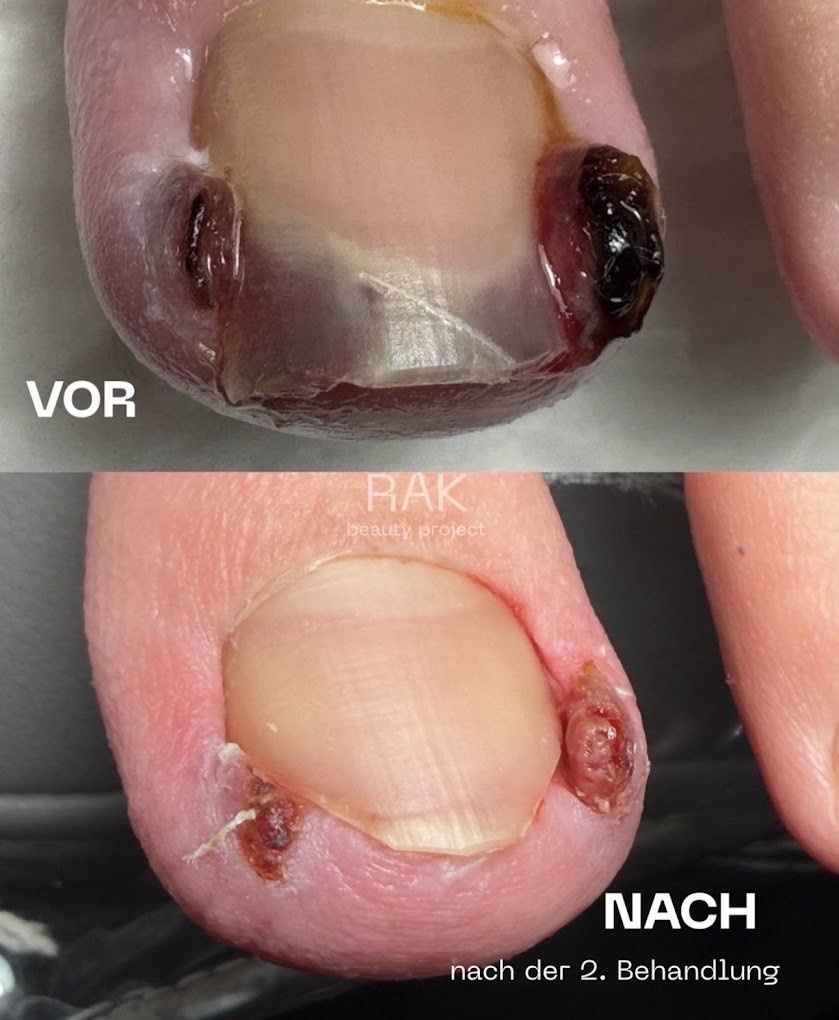
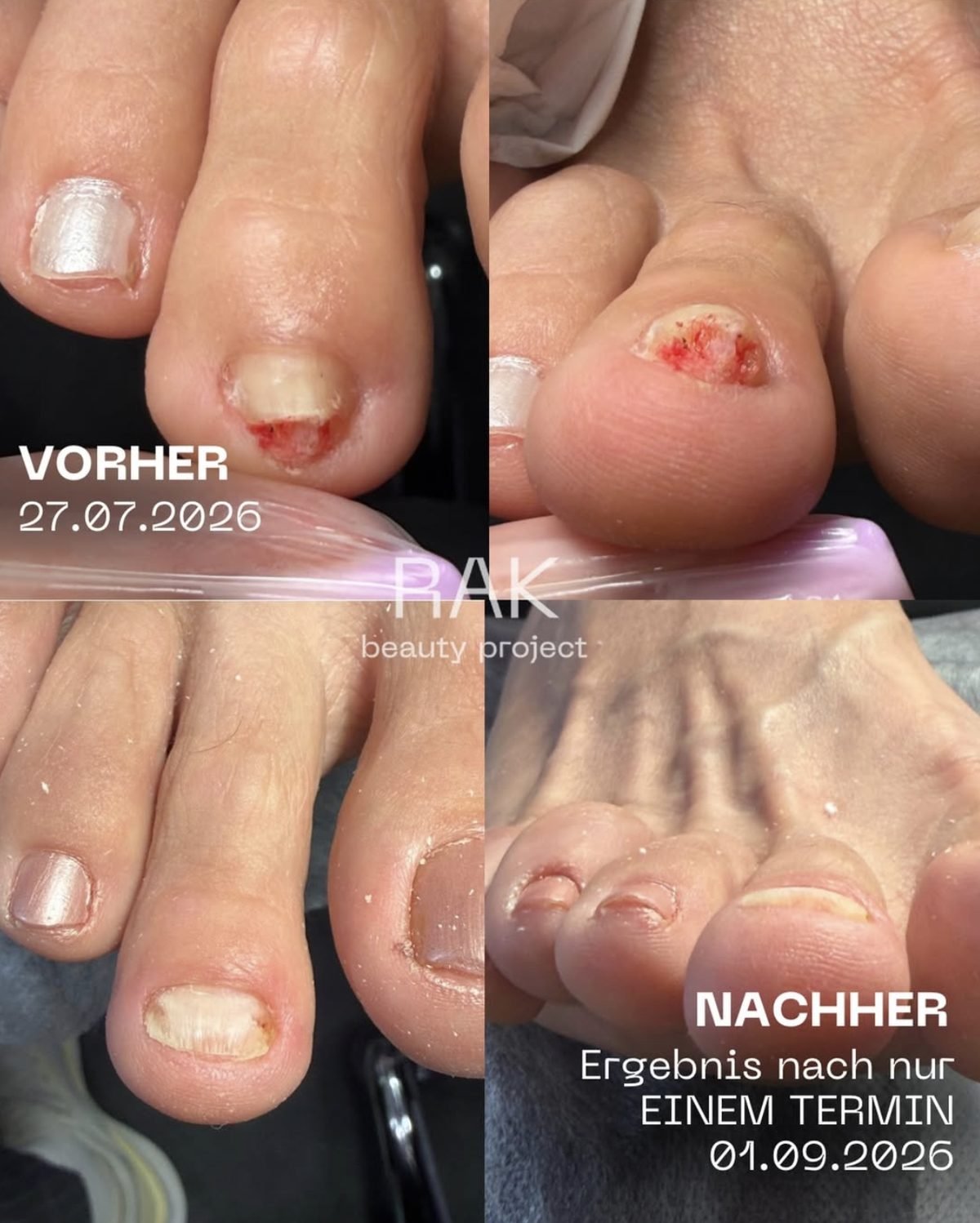
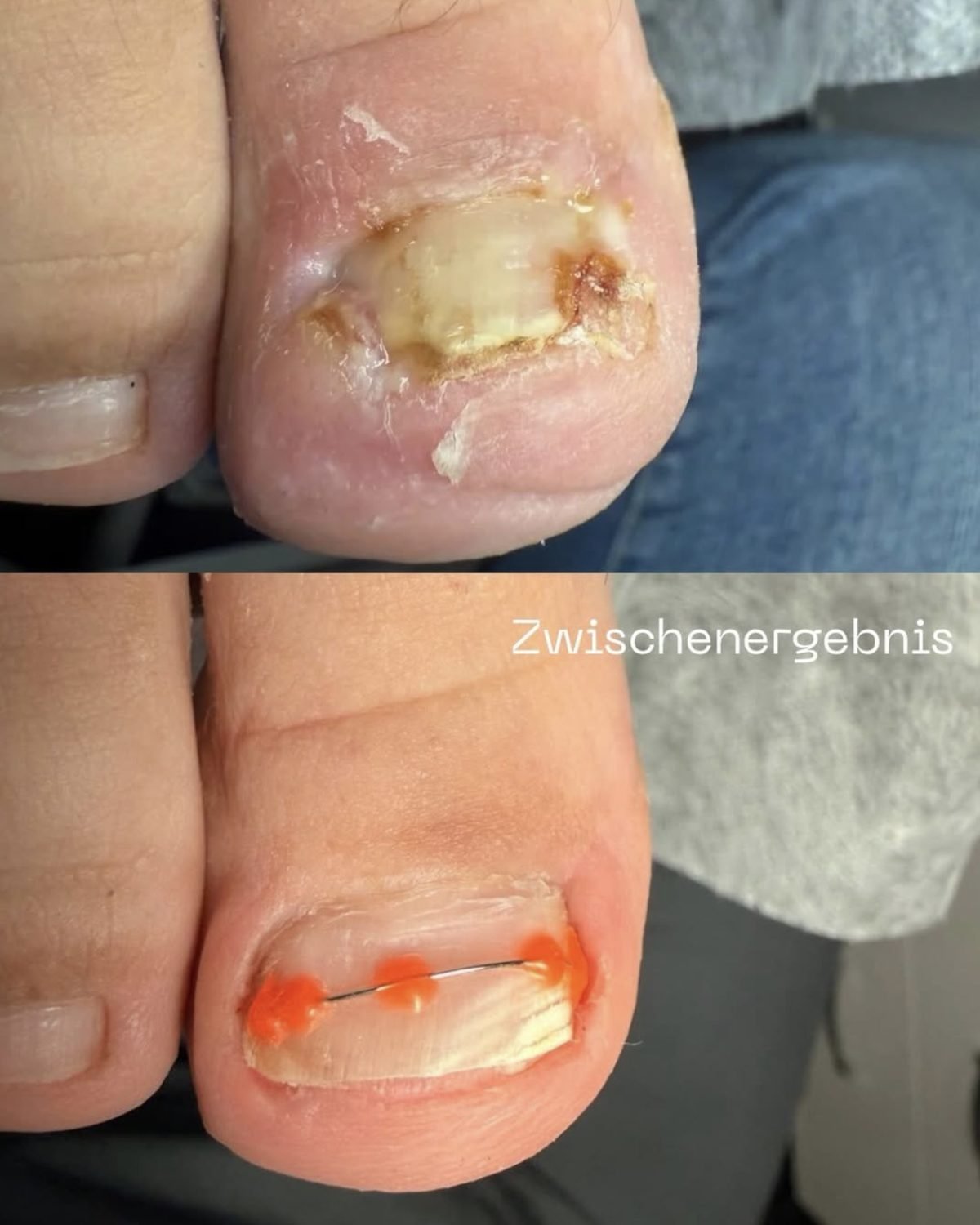
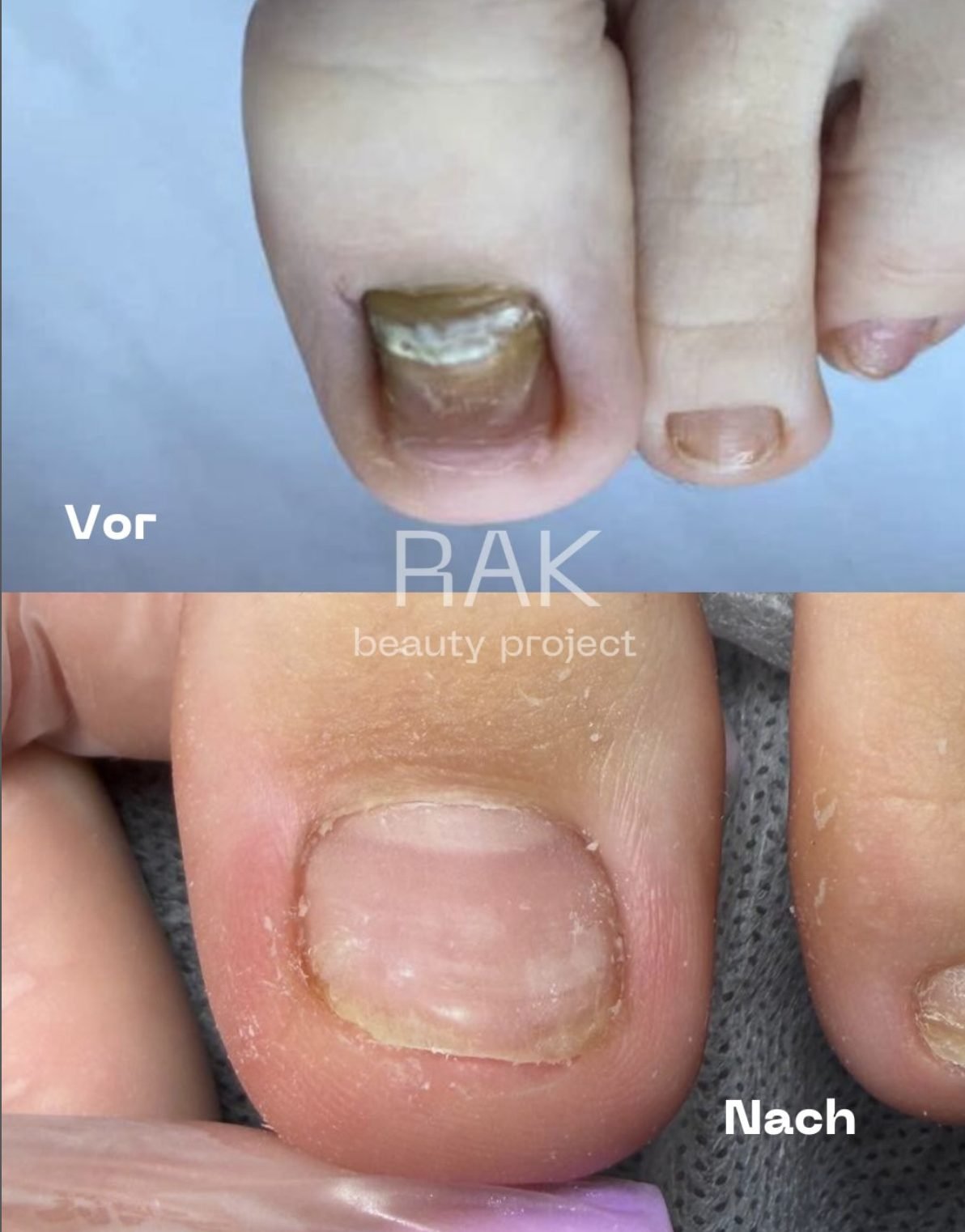
If the nail curls inward significantly, constantly presses against the lateral nail fold, or the problem recurs, a podiatrist may recommend a small nail correction system. This is a delicate device that is attached to the nail plate. Using individually adjusted tension, it gradually lifts the edges of the nail and promotes a more favorable direction of growth.
The system is selected based on the child’s age, the size and thickness of the nail, the extent of the inflammation, and the child’s activity level. It is small, causes little disruption in daily life, and allows you to address the root cause of recurring ingrown nails rather than simply removing the painful corner temporarily. Follow-up appointments are necessary as the nail grows. During these appointments, the specialist assesses the progress and adjusts the system as needed or replaces it.
Whether and when such a system can be implanted will be determined only after the examination. In cases of severe inflammation, it may first be necessary to treat the wound and allow the tissue to heal.
What happens during an appointment with a child?
Working with children requires not only expertise but also patience. We don’t start treatment suddenly, and we don’t hold the child down against their will. First, we get to know each other, show the child the safe instruments, explain each step in simple terms, and give the child time to get used to the situation. Of course, a parent or guardian is welcome to stay and provide support.
All procedures are performed as gently as the condition of the affected toe allows. Our goal is to minimize discomfort as much as possible, avoid frightening the child, and help them develop a calm attitude toward further care. If the child needs a break, we pause the treatment. This approach ensures an appointment free of unnecessary stress, pressure, and tears.
We strictly adhere to all applicable hygiene requirements. Disposable materials are used only once. Reusable instruments undergo the prescribed disinfection and sterilization process.
When Additional Medical Care Is Needed
A podiatrist works within their area of expertise and, if necessary, recommends an examination by a pediatrician, a dermatologist, or a surgeon. Medical attention is especially important if the child develops a fever, the redness spreads rapidly beyond the nail fold, there is significant pus formation or severe throbbing pain, or the child’s overall condition worsens. Children with diabetes, circulatory disorders, a weakened immune system, or other conditions that affect wound healing also require medical supervision.
In cases of complicated, advanced, or recurrent symptoms, a doctor may consider surgical treatment. However, timely podiatric care often makes it possible to use conservative and less invasive methods first.
Can a fingernail also grow into the skin?
Ingrown nails are less common on the hands than on the feet. However, painful inflammation around the nails can still occur in children. Possible causes include cutting the nails too short, cutting the corners too deep, torn cuticles, nail-biting, pulling nails off, picking at the skin, and minor injuries.
An ingrown nail edge must be distinguished from paronychia, which is an inflammation of the nail fold. A podiatrist will assess the condition, gently treat the affected area within the scope of their expertise, and explain how to care for it going forward. If there is pus, increasing swelling, severe pain, or spreading redness, the child should be examined by a doctor.
How can you reduce the risk of ingrown hairs?
- Check regularly to see if your shoes have become too tight in length, width, or height in the toe area.
- Choose styles with enough room in the toe box so your toes aren't squished.
- Buy socks in the right size and change them if they get damp after school or practice.
- Cut your toenails as straight as possible, not too short, and without cutting the corners too deeply.
- Do not let the child tear off or cut out the painful edge of the nail on their own.
- Dry your feet thoroughly after washing, especially between your toes.
- If you experience excessive sweating, consult a healthcare professional about appropriate home care.
- If you have a nail injury or recurring redness, do not delay in getting it examined.
Frequently Asked Questions
How can I tell if my child needs podiatric care?
An ingrown toenail in children should be evaluated by a healthcare professional if the edge of the nail is painful when pressed, the skin is red or swollen, a wound or discharge has developed, the child is limping or avoiding sports, sensitive red tissue is forming, the problem recurs, or the nail is curling inward noticeably.
How is an ingrown toenail treated by a podiatrist in children?
The specialist examines the nail, the nail folds, and the foot; if necessary, gently removes only the part of the nail that is causing pressure; treats the affected area; and explains how to care for it at home. Depending on the findings, an appropriate correction method is then selected, and the patient’s progress is monitored.
What is a nail correction system, and when is it used?
A small nail correction system is used for recurrent or severely ingrown nails. It gradually lifts the edges of the nail using a customized amount of tension. Whether and when it is appropriate can only be determined after a podiatric examination.
Can a fingernail also grow into the skin?
Actual ingrown nails are less common on the hands than on the feet, but painful inflammation around the nails can occur in children—for example, due to cutting them too short, biting their nails, or minor injuries.
When should you also see a doctor?
If you have a fever, rapidly spreading redness, significant pus formation, severe throbbing pain, or an underlying condition such as diabetes, you should see a doctor. In these cases, the podiatrist will refer you to the appropriate specialist.
Questions about treatment? Schedule an appointment
Please leave your phone number—we'll contact you to schedule an appointment at RAK Beauty in Vienna.
Conclusion: Act early, treat gently
An ingrown toenail in children is a common and easily treatable problem. It’s crucial not to wait until mild redness develops into a painful wound. We work with children and adolescents in a calm, gentle manner and without pressure. We remove the source of the injury, support tissue healing, use a small nail correction system if necessary, and support the child until a stable outcome is achieved.
If your child complains of pain in a fingernail or you notice redness and swelling, make an appointment Appointment for a podiatry consultation at RAK Beauty in Vienna. Early diagnosis usually means a simpler, more comfortable, and gentler course of treatment. You can find out more about our services at the Podiatry Page, the current prices on our Price List.