


An ingrown toenail is a toenail whose sides curve inward more sharply than usual. It can cause pain when walking, when wearing closed-toe shoes, or even with just slight pressure. The sooner the condition is evaluated by a podiatrist, the more effectively the appropriate treatment can be planned.
At RAK Beauty in Vienna, we carefully examine your nails and discuss with you which treatment is best suited to your condition—from a custom-fitted corrective brace to regular checkups. Learn more about podiatry at RAK Beauty.
Roll Nails at a Glance
- What: The nail plate is more curved across its width, and the sides curl inward
- Complaints: Pain when pressure is applied while walking and when wearing closed-toe shoes
- Help: Custom orthodontic braces, professional thinning, regular checkups
- Date: Podiatrics consultation at RAK Beauty, Kleistgasse 10, 1030 Vienna
What is a roller nail?
In a rolled nail, the nail plate is more strongly curved transversely. The lateral edges may curl inward on both sides or bend inward on only one side. In severe cases, the nail appears almost tubular.
Ingrown toenail or curled toenail—what's the difference?
A curled nail is not automatically an ingrown nail. With an ingrown nail, a nail edge usually penetrates the skin and injures the surrounding tissue. A curled nail can initially cause mainly pressure and pain. However, these two nail conditions can overlap if a curled edge continuously presses against the skin.
| Characteristic | Rolled nail (curled nail) | Ingrown Toenail |
|---|---|---|
| What's happening? | The nail plate is more curved across its width, and the edges curl inward. | The edge of a fingernail pierces the skin and injures the surrounding tissue. |
| Common Symptoms | Pain caused by pressure on the edge of the toenail, especially when walking and wearing closed-toe shoes. | Pain, redness, swelling, and irritated skin around the nail fold. |
| Podiatric Care | Nail correction using a corrective brace, professional thinning, and follow-up visits. | Targeted relief of pressure on the nail margin and treatment; correction as indicated by the findings. |
What symptoms can an ingrown toenail cause?
Not every ingrown toenail causes discomfort. If the nail presses against the nail fold or the surrounding tissue, the following symptoms may occur:
- Pain when pressure is applied to the side of the nail
- Discomfort when walking or wearing closed-toe shoes
- high sensitivity to touch
- thickened, reddened, or irritated skin around the nail fold
The big toe is often affected. Other toenails can also curl inward.
Possible influencing factors
The shape of the nail can change for various reasons. Factors such as individual predisposition, changes in the nail plate, previous injuries, or prolonged pressure on the toe may play a role. Tight shoes can further exacerbate existing symptoms.
Treatment for Ingrown Toenails in Vienna: How Podiatry Can Help
Treatment depends on the shape of the nail, the symptoms, and the condition of the surrounding skin. First, the nail plate, the nail folds, and the free edge of the nail are examined.
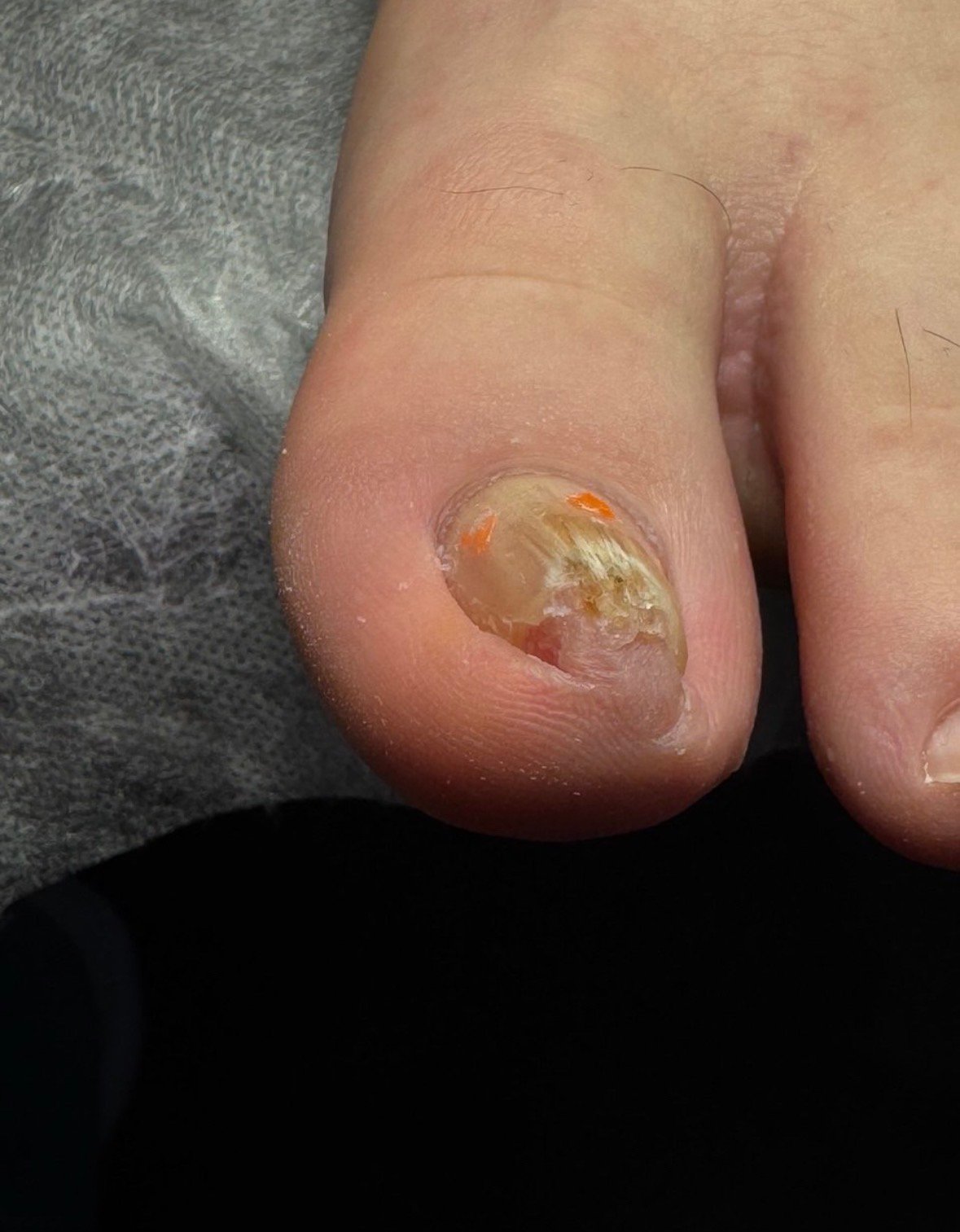
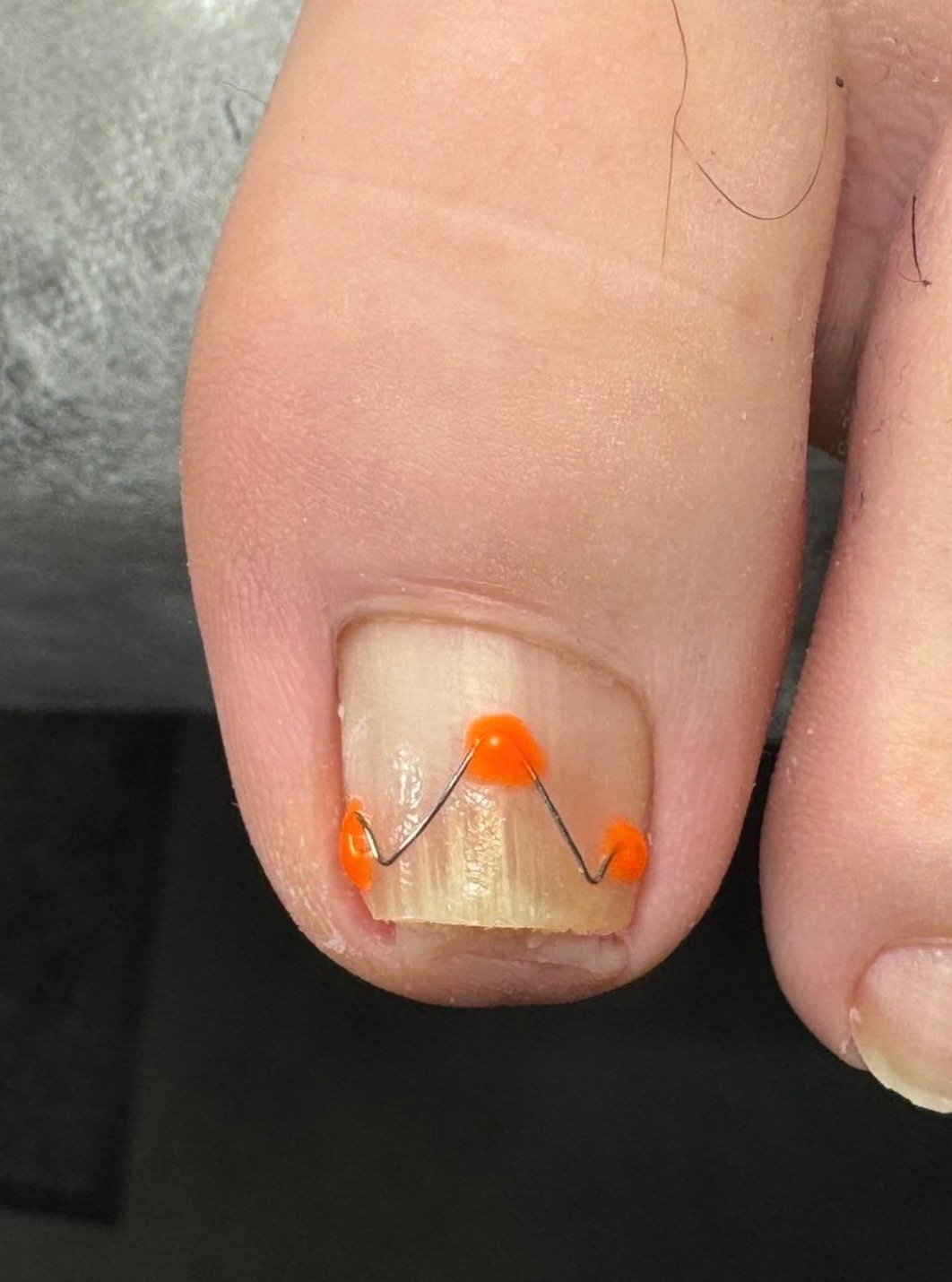
When a curled toenail requires treatment, nail correction is a central component of podiatric care. A custom-fitted corrective brace can specifically address the lateral curvature and reduce pressure on the surrounding tissue. The decision regarding which brace is appropriate and whether it can be applied is made following an examination.
In addition, the nail plate can be professionally thinned and shaped. Regular checkups are important so that the treatment can be adjusted to account for nail growth and the progression of symptoms.
What can you do on your own?
Do not cut the corners of your nails too deeply, and do not try to expose the sides of your nails by pushing them under the skin with sharp instruments. This can injure the skin. Trim your nails carefully, and choose shoes that provide enough room for your toes.
If your nail is repeatedly painful, is curling inward more and more, or if the skin around the nail fold is irritated, have it examined by a podiatrist.
When should a toe be examined by a doctor?
If there are open sores or a purulent discharge, the toe should be examined by a doctor as soon as possible. You can also find related nail problems in our article on Ingrown Toenails in Children and Adolescents.
Frequently Asked Questions About the Roll Nail
What is a roller nail?
A rolled toenail (ingrown toenail) is a toenail whose nail plate is more curved across its width than usual. The sides curl inward; in severe cases, the toenail appears almost tubular. This can put pressure on the nail fold and cause pain when walking.
Is a rolled nail the same thing as an ingrown nail?
No. With an ingrown toenail, a portion of the nail edge usually penetrates the skin and injures the tissue. A curled toenail initially causes mainly pressure and pain. These two conditions can overlap if a curled edge exerts constant pressure on the skin.
How is a ingrown toenail treated?
Treatment is tailored to the shape of the nail, the symptoms, and the condition of the surrounding skin. The central component is nail correction using a custom-fitted corrective brace. In addition, the nail plate can be professionally thinned. Regular checkups allow the treatment to be adjusted to accommodate nail growth.
What is a nail correction brace?
A corrective brace is a delicate device that is attached to the nail and specifically targets the lateral curvature. This allows it to reduce pressure on the surrounding tissue. Whether a brace is appropriate—and, if so, which type—is determined only after a podiatric examination.
What should I keep in mind if I have an ingrown toenail?
Do not cut the corners of your nails too deeply, and do not use sharp instruments to dig under the skin along the sides of your nails. Trim your nails carefully, and wear shoes that provide enough room for your toes.
When should I have a rolled nail examined?
If the toenail is repeatedly painful, is curling inward more and more, or if the skin around the nail fold is irritated, it is advisable to have it evaluated by a podiatrist. If there are open sores or a purulent discharge, the toe should be examined by a doctor as soon as possible.
Questions about treatment? Schedule an appointment
Please leave your phone number—we'll contact you to schedule an appointment at RAK Beauty in Vienna.
Conclusion: Get an evaluation early on
An ingrown toenail does not necessarily cause discomfort. If pain or pressure points develop, a professional evaluation can help ensure that the nail and the surrounding skin are treated appropriately.
If you have any discomfort around the edge of your nail or notice any changes, please schedule an Appointment for a podiatric evaluation at RAK Beauty in Vienna. We carefully examine your nails and discuss with you which treatment is best suited to your specific condition. You can find more information about our services on the Podiatry Page.